Introduction
Generating leads is an important part of B2B marketing, but generating the right leads is what makes the real difference. A large contact list means little if those prospects do not match your ideal customer profile or have no immediate need for your solution.
For many B2B companies, identifying promising prospects takes time. Marketing teams need to research accounts, understand buyer behavior, qualify leads, and coordinate with sales teams. When these activities rely heavily on manual work, valuable opportunities can be overlooked.
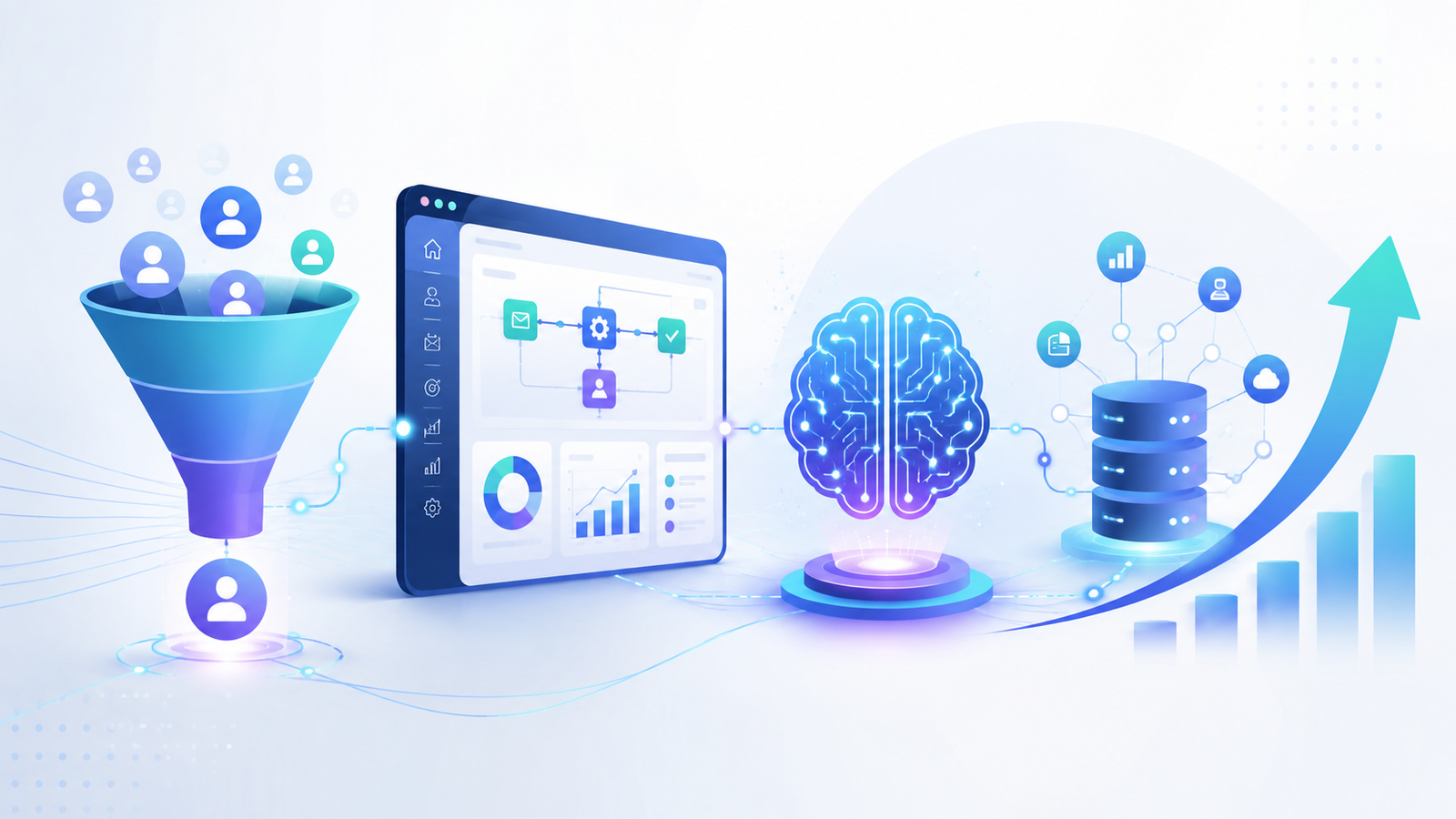
AI-powered lead generation offers a more informed way to approach this challenge. By analyzing relevant data, identifying behavioral patterns, and supporting personalized engagement, AI can help businesses prioritize prospects and make better use of their marketing and sales resources.
However, AI is not a shortcut to guaranteed conversions. Its effectiveness depends on the quality of the data, the relevance of the marketing strategy, and how well teams use the insights they receive.
In this article, we explore seven practical ways B2B companies can use AI-powered lead generation to identify high-intent buyers, improve lead qualification, and create better opportunities for business growth.
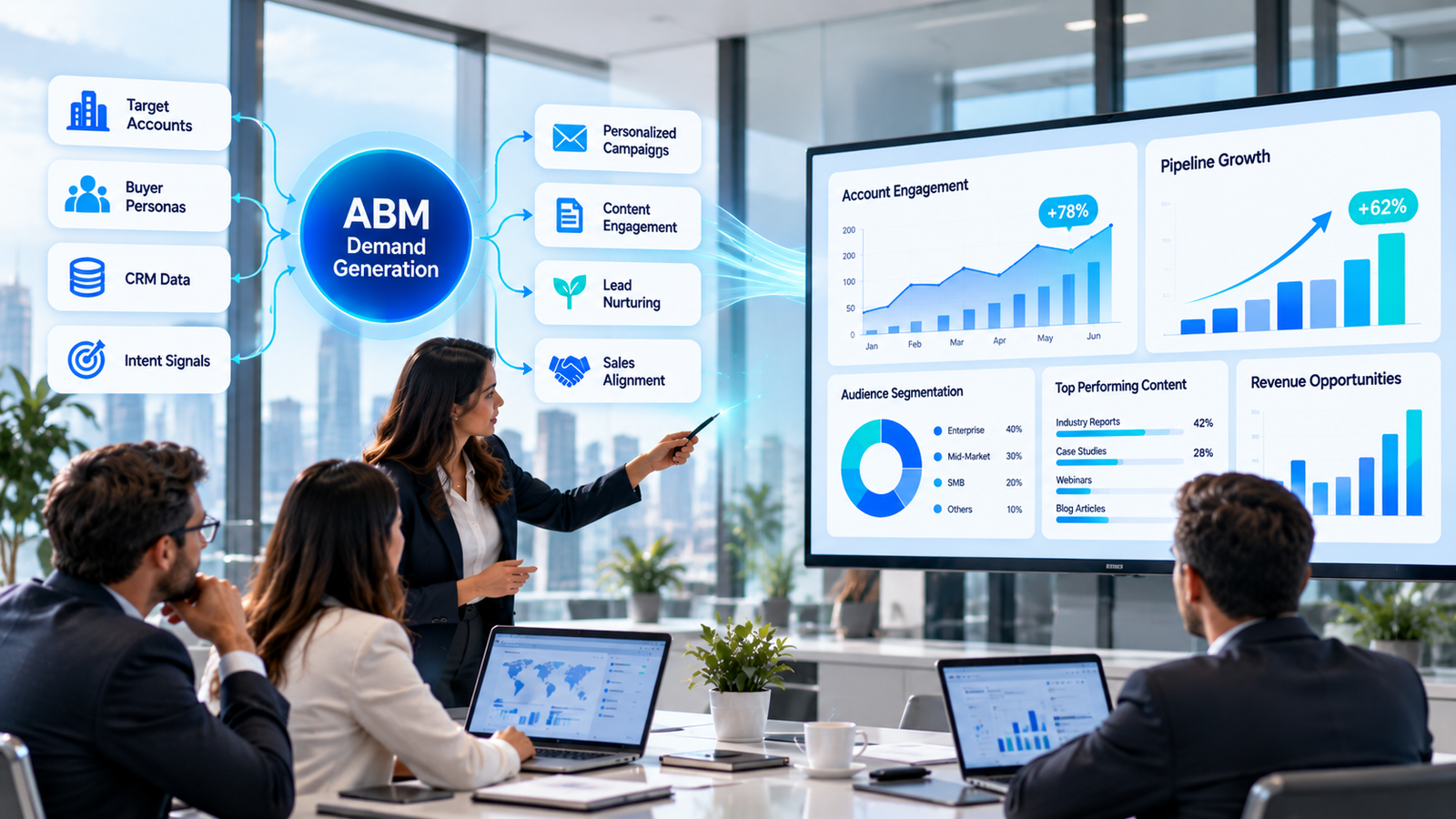
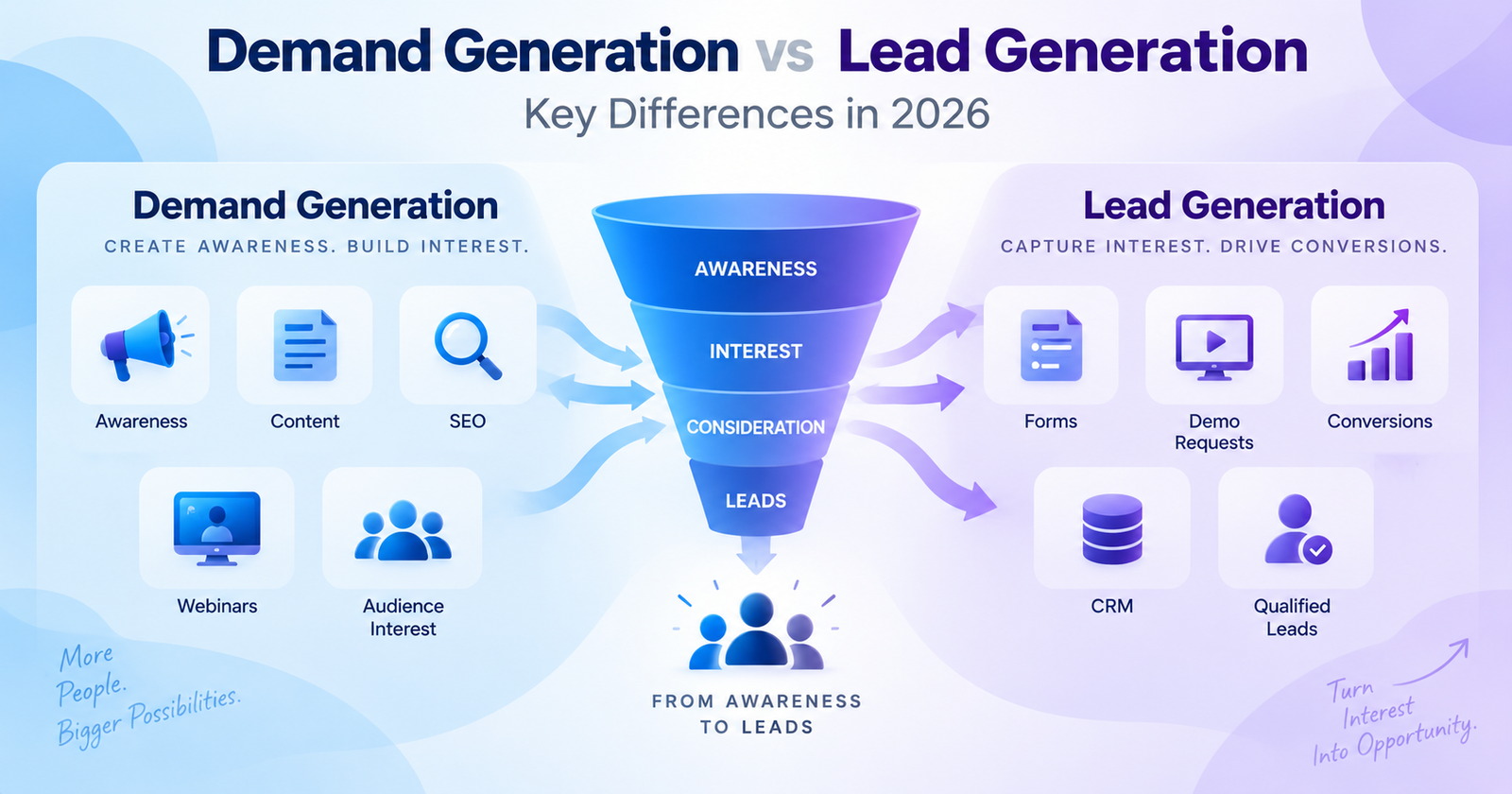
The goal is not simply to generate more leads. You can also learn more about B2B demand generation.
Table of Contents
What Is AI-Powered Lead Generation?
AI-powered lead generation uses artificial intelligence to support the process of finding, evaluating, and engaging potential customers.
Traditional lead generation often depends on manual prospect research, predefined qualification rules, and broad marketing campaigns. AI can help analyze larger amounts of information, identify patterns in buyer behavior, and highlight prospects who may be a better fit for a company’s products or services.
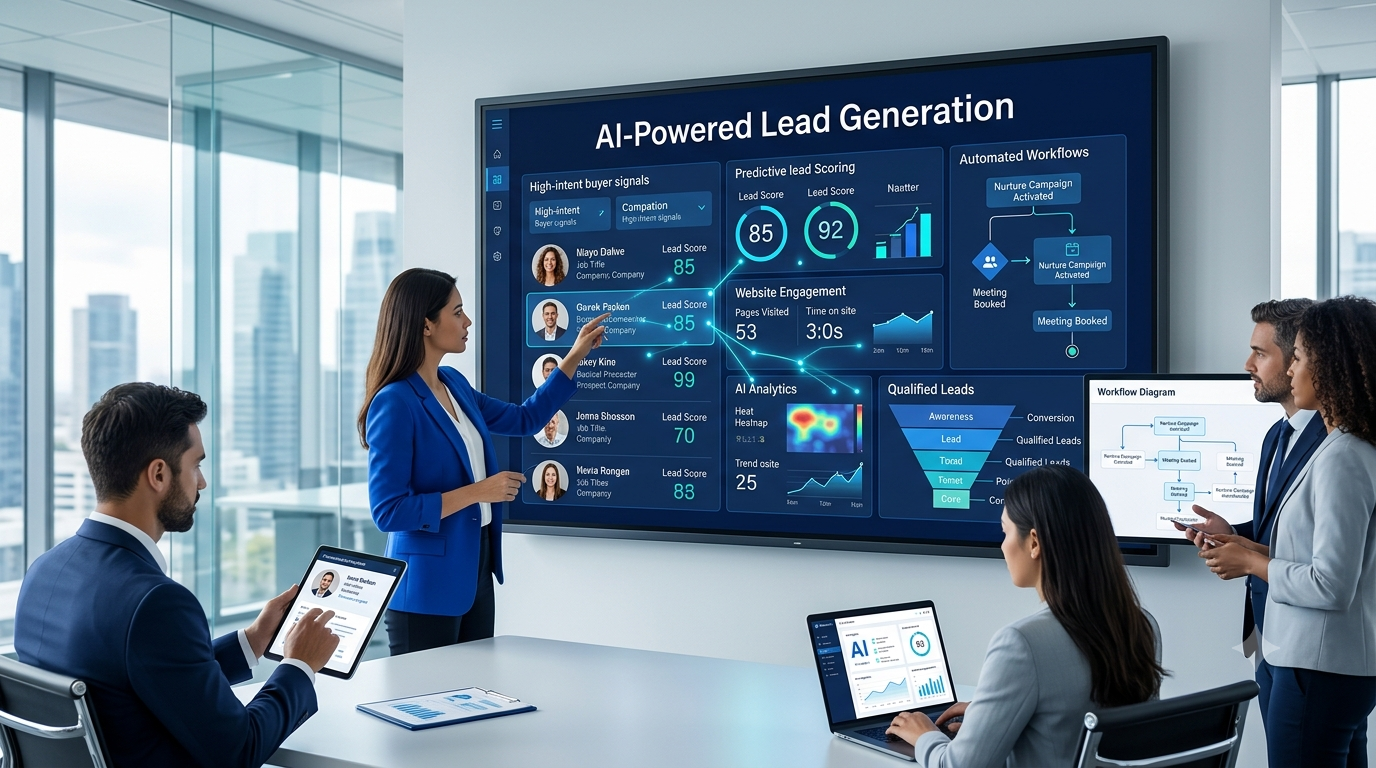
For example, a B2B technology company might use AI to analyze website engagement, company information, CRM records, and campaign interactions. These insights can help the marketing team decide which accounts deserve further research and which prospects may benefit from a relevant follow-up.
The goal is not simply to generate more leads. It is to help businesses focus on prospects who are more likely to become qualified sales opportunities.
The important point is that AI-powered lead generation should support the marketing and sales process rather than replace human judgment.
Why AI-Powered Lead Generation Matters for B2B Businesses
B2B buyers rarely make purchasing decisions after a single interaction. They research solutions, compare providers, consult colleagues, and evaluate whether a product addresses their business challenges.
This makes it difficult for marketing teams to identify the right moment to engage.
AI can help by bringing together relevant information from different marketing and sales activities. It can support lead prioritization, reveal engagement patterns, and help teams tailor their communication to different audiences.
When used thoughtfully, AI-powered lead generation can help businesses:
- Identify prospects that match their ideal customer profile.
- Prioritize leads using relevant engagement and qualification signals.
- Create more personalized marketing and sales communication.
- Reduce repetitive research and administrative work.
- Improve coordination between marketing and sales teams.
- Measure performance using meaningful business outcomes.
These benefits depend on how well the technology fits the company’s existing processes. A clear strategy and reliable data remain essential.
1. Better prospect prioritization
Not every contact deserves the same amount of sales attention.
AI-powered scoring can help teams prioritize prospects based on fit, behavior, engagement, and other available signals.
This allows sales representatives to spend more time on potentially valuable opportunities.
2. More relevant engagement
Generic messages are easy for B2B buyers to ignore.
AI-powered lead generation can help marketers create more relevant experiences based on an account’s interests, industry, stage in the buying journey, and previous interactions.
3. Faster marketing workflows
Research, segmentation, scoring, personalization, reporting, and follow-up can require significant manual effort.
Automation can reduce repetitive work while allowing marketers to focus on strategy, creative development, and optimization.
7 Benefits of AI-Powered Lead Generation
1. Identify High-Intent Buyers
One of the biggest opportunities is identifying prospects who demonstrate meaningful buying signals.
For example, consider two companies visiting your website.
Company A reads one introductory blog post.
Company B visits several product pages, downloads a whitepaper, returns multiple times, and interacts with a case study.
Both companies are leads, but Company B may demonstrate stronger buying intent.
AI can help analyze these different signals and prioritize accounts accordingly.
2. Improve Lead Scoring
Traditional lead scoring often uses predefined rules.
For example:
- +5 points for an email click
- +10 points for a whitepaper download
- +20 points for a demo request
AI can make scoring more dynamic by analyzing combinations of signals.
Instead of asking only, “What action did the prospect take?”, marketers can also ask:
“What combination of behaviors is associated with stronger opportunities?”
This can make lead prioritization more useful when sufficient quality data is available.
However, marketers should regularly review scoring models. Poor-quality data can produce poor recommendations.
3. Improve B2B Data Quality
AI is only as useful as the data supporting it.
Incomplete company information, outdated contacts, duplicate records, and incorrect segmentation can weaken lead-generation campaigns.
AI-assisted data processes can help marketers identify inconsistencies, enrich records, classify accounts, and organize prospect information.
For B2B organizations, this can be particularly useful when combining CRM information with marketing engagement data.
4. Personalize Buyer Engagement
Personalization does not simply mean adding a prospect’s first name to an email.
Useful personalization connects the message to the prospect’s actual business situation.
For example, a technology company may receive content about improving marketing data quality, while a manufacturing company may receive content focused on demand forecasting and account intelligence.
AI can help marketers analyze audience characteristics and create variations of messaging for different segments.
The human marketing team should still review important communications to make sure the message is accurate, useful, and aligned with the brand.
5. Automate Lead Nurturing
Not every prospect is ready to speak with sales immediately.
Some may need educational content before they are ready to evaluate vendors.
AI and marketing automation can help create nurturing journeys based on actions and engagement.
A simple journey might look like:
Content download → educational email → related case study → product page visit → sales-ready signal → sales outreach
Lead nurturing works best when messages are relevant to the prospect’s stage rather than simply sending the same sequence to everyone.
Salesforce describes lead nurturing as a process for building relationships through relevant, personalized content across the buyer journey.
6. Help Sales Teams Focus on Better Opportunities
A strong lead-generation system should create alignment between marketing and sales.
Marketing can use AI to identify promising accounts and provide useful context.
Sales can then use that information to decide where human outreach makes sense.
For example, a sales representative might see that an account has:
- Repeated website engagement
- Interest in a specific solution
- Several content interactions
- Multiple contacts from the same organization
- Recent engagement with a product page
Instead of beginning with a generic message, the salesperson has a clearer reason for reaching out.
7. Optimize Campaign Performance
AI can also support campaign optimization.
Marketers can analyze performance across:
- Audience segments
- Content
- Landing pages
- Email campaigns
- Lead sources
- Conversion events
- Account engagement
The objective is not to automate every marketing decision.
It is to make decisions faster using better information.
HubSpot’s current lead-generation resources emphasize connecting AI and automation with lead quality, conversion, experimentation, and measurable revenue outcomes.
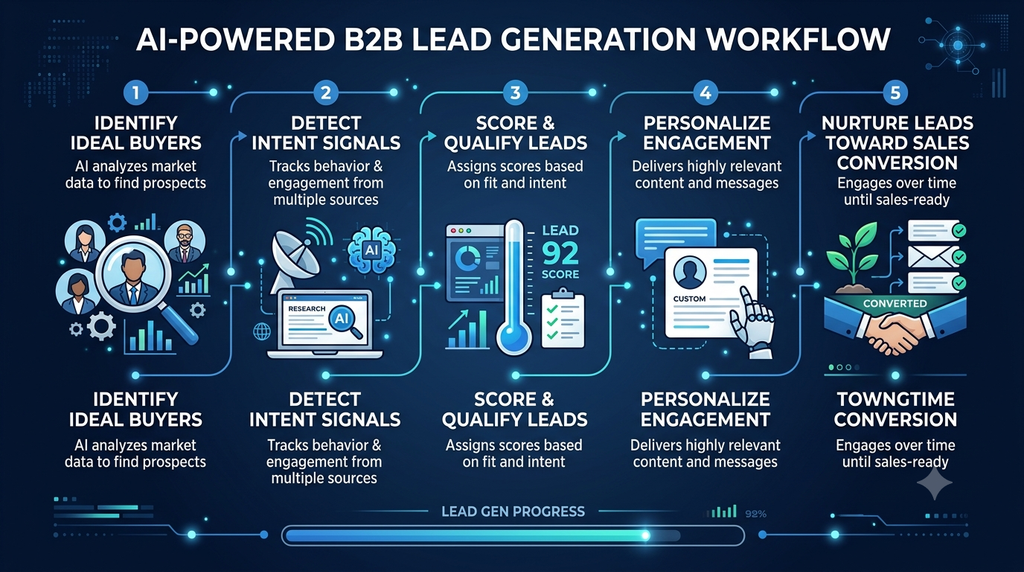
How to Use AI-Powered Lead Generation
A practical implementation does not require automating your entire marketing operation on day one.
Start with the fundamentals.
Step 1: Define Your Ideal Customer Profile
Before using AI, define who you actually want to attract.
Consider:
- Industry
- Company size
- Geography
- Revenue range
- Technology environment
- Business challenges
- Decision-maker roles
- Buying triggers
A clear ICP gives your AI and automation systems a better framework for identifying relevant prospects.
Step 2: Connect Your Data
Bring important data sources together where possible.
These may include:
- CRM data
- Website analytics
- Marketing automation
- Email engagement
- Content downloads
- Advertising platforms
- Sales activity
- Customer data
The goal is to build a more complete picture of the account.
Step 3: Define Intent Signals
Identify the behaviors that indicate meaningful interest.
For example:
Low intent:
Reading a general blog post.
Medium intent:
Downloading an industry guide.
High intent:
Visiting pricing or product pages repeatedly and requesting a consultation.
Your actual signals will depend on your business and buying journey.
Step 4: Create Lead-Scoring Rules
Use a combination of:
Fit + Engagement + Intent
For example:
Lead priority = Company fit + Buyer engagement + Buying signals
Avoid creating an unnecessarily complicated scoring system.
A simple model that your marketing and sales teams understand is often more useful than a complex model nobody trusts.
Step 5: Build Personalized Nurturing Journeys
Create different journeys for different audience segments.
For example:
New prospect → educational content
Engaged prospect → comparison content
High-intent prospect → case study or consultation
Sales-ready prospect → direct sales follow-up
This creates a more natural buyer experience.
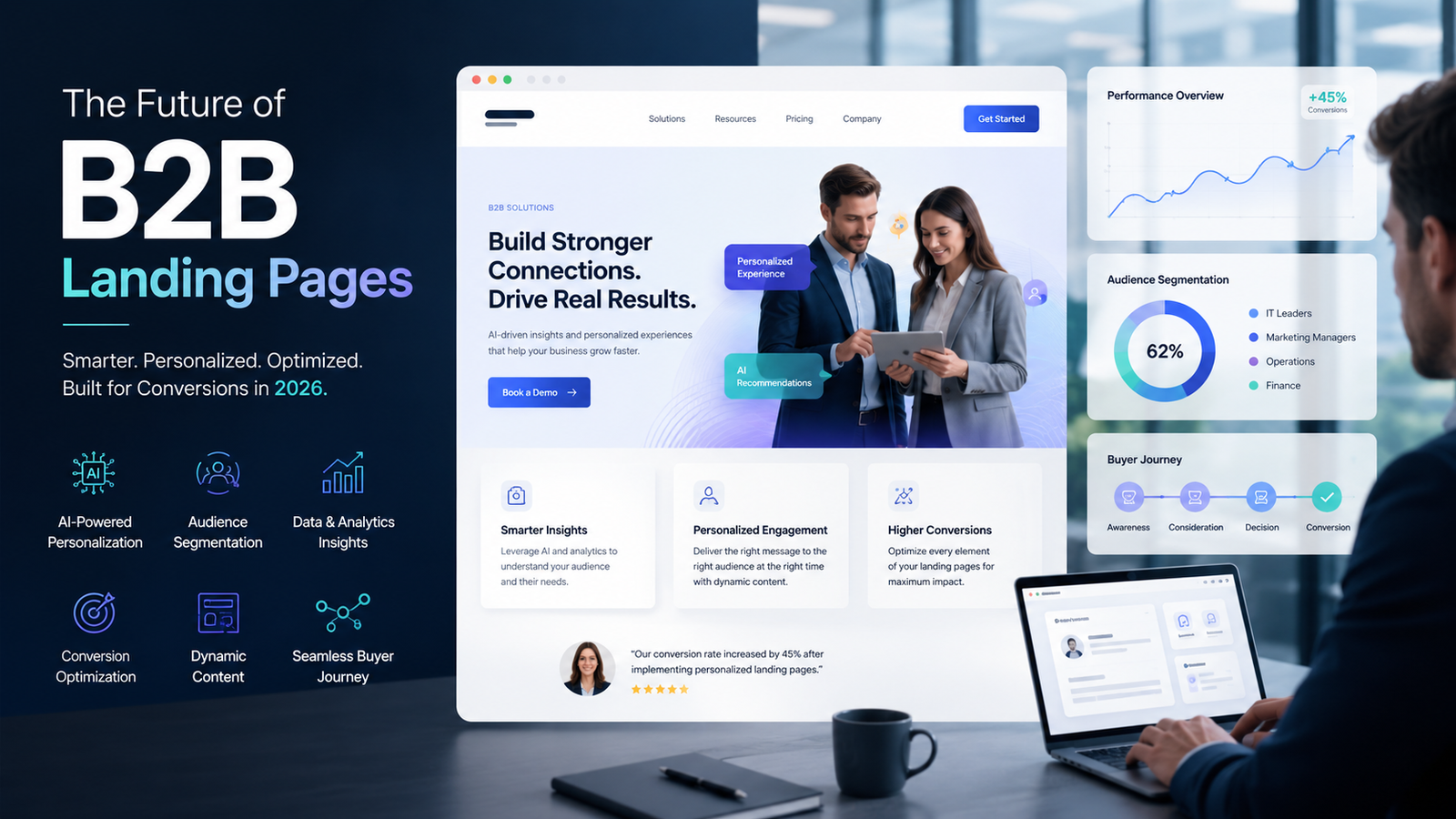
Step 6: Optimize Your Landing Pages
Your landing page is where interest can become a measurable lead.
Keep the page focused on one primary action.
A strong B2B landing page should generally communicate:
- The problem
- The solution
- The value
- Supporting evidence
- A clear call to action
- A simple form
AI can help analyze page performance and identify opportunities for testing, but marketers should validate recommendations using actual campaign data.
How to Measure AI-Powered Lead Generation Performance
Lead volume alone does not show whether a lead generation strategy is working. Businesses need to understand whether their activities are producing qualified opportunities and contributing to revenue.
The following metrics can help evaluate performance:
| Metric | What it measures |
|---|---|
| Marketing-qualified leads (MQLs) | Leads that meet the agreed marketing qualification criteria |
| Sales-qualified leads (SQLs) | Leads that meet the agreed sales qualification criteria |
| Lead-to-opportunity conversion rate | The proportion of leads that become sales opportunities |
| Cost per qualified lead | The cost of acquiring each qualified lead |
| Lead response time | How quickly the team responds to relevant inquiries |
| Pipeline generated | The value of sales opportunities associated with marketing activities |
| Customer acquisition cost | The cost of acquiring customers through relevant sales and marketing activities |
Review these metrics over consistent periods and compare them with a baseline. Where possible, use controlled tests to determine whether AI-assisted changes are responsible for better outcomes.
The most useful measurement approach connects marketing performance with the quality of the opportunities entering the sales pipeline.
Common Mistakes to Avoid
Using AI Without a Clear Strategy
AI cannot fix a poorly defined target audience.
Start with your ICP, buyer journey, offer, and conversion goal.
Focusing Only on Lead Volume
More leads do not automatically mean more revenue.
Track lead quality and downstream sales outcomes instead of celebrating database growth alone.
Trusting AI Scores Blindly
An AI-generated score is not a guarantee that a prospect will buy.
Sales and marketing teams should be able to review the reasoning behind prioritization where possible.
Ignoring Data Quality
Bad data can lead to bad targeting.
Regularly review duplicate records, outdated information, missing fields, and incorrect account classifications.
Over-Personalizing
Personalization should be helpful, not intrusive.
Use information that genuinely improves the buyer experience.
Removing Humans From the Process
AI can automate research and repetitive tasks, but human expertise remains important for strategy, relationship building, complex sales conversations, and final decision-making.
Best Practices for AI-Powered Lead Generation
To build a sustainable system, follow these principles:
Start With Business Goals
Define what success means before choosing AI tools.
Your objective could be:
- More qualified leads
- Better MQL-to-SQL conversion
- Higher landing-page conversion
- Faster lead response
- Better sales pipeline quality
Keep Your Data Clean
Create regular processes for data validation and enrichment.
Align Marketing and Sales
Agree on what constitutes an MQL, SQL, qualified account, and sales-ready opportunity.
Test Before Scaling
Start with one campaign, audience, or workflow.
Measure the results, improve the process, and then expand.
Measure Revenue, Not Just Clicks
Important metrics can include:
- Cost per qualified lead
- MQL-to-SQL conversion
- SQL-to-opportunity conversion
- Pipeline generated
- Opportunity conversion
- Revenue influenced
- Lead response time
This gives your team a clearer picture of whether AI is actually improving business performance.
Frequently Asked Questions About AI-Powered Lead Generation
1. What is AI-powered lead generation?
AI-powered lead generation uses artificial intelligence to help identify prospects, analyze relevant buyer signals, prioritize leads, personalize engagement, and improve lead qualification.
2. How does AI identify high-intent B2B buyers?
AI can analyze relevant website activity, content engagement, account information, and other buying signals to help identify prospects who may be evaluating a solution. These signals should be considered alongside company fit and verified by the sales or marketing team.
3. Can AI improve B2B lead conversion rates?
AI can support better targeting, qualification, personalization, and campaign optimization. Actual improvements depend on the quality of the data, the strategy, and how effectively the team uses the insights.
4. What data is needed for AI-powered lead generation?
Depending on the use case, businesses may use CRM records, company information, campaign engagement, website activity, and historical sales outcomes. Data should be accurate, relevant, and handled responsibly.
5. Is AI-powered lead generation suitable for small businesses?
Yes. Small businesses can begin with focused applications such as AI-assisted prospect research, lead qualification, content personalization, and follow-up automation. The right approach depends on the business’s budget, data, and objectives.
6. How can businesses measure AI lead generation success?
Businesses can track qualified leads, lead-to-opportunity conversion rates, cost per qualified lead, pipeline generated, and customer acquisition cost. Comparing these metrics over time helps determine whether the approach is delivering meaningful results.
Final Thoughts
AI-powered lead generation is becoming an important part of modern B2B marketing because it helps teams work with large amounts of prospect and engagement data more efficiently.
But the technology itself is not the strategy.
The strongest approach combines quality data, clear buyer targeting, useful content, intent signals, personalization, automation, and human expertise.
Start small.
Define your ideal customer, identify meaningful buying signals, improve lead scoring, build relevant nurturing journeys, and continuously measure what happens after a lead enters your funnel.
When these pieces work together, AI becomes more than a productivity tool. It can become a practical part of a B2B demand-generation engine designed to find the right buyers, engage them with relevant experiences, and move qualified opportunities toward sales.