Introduction
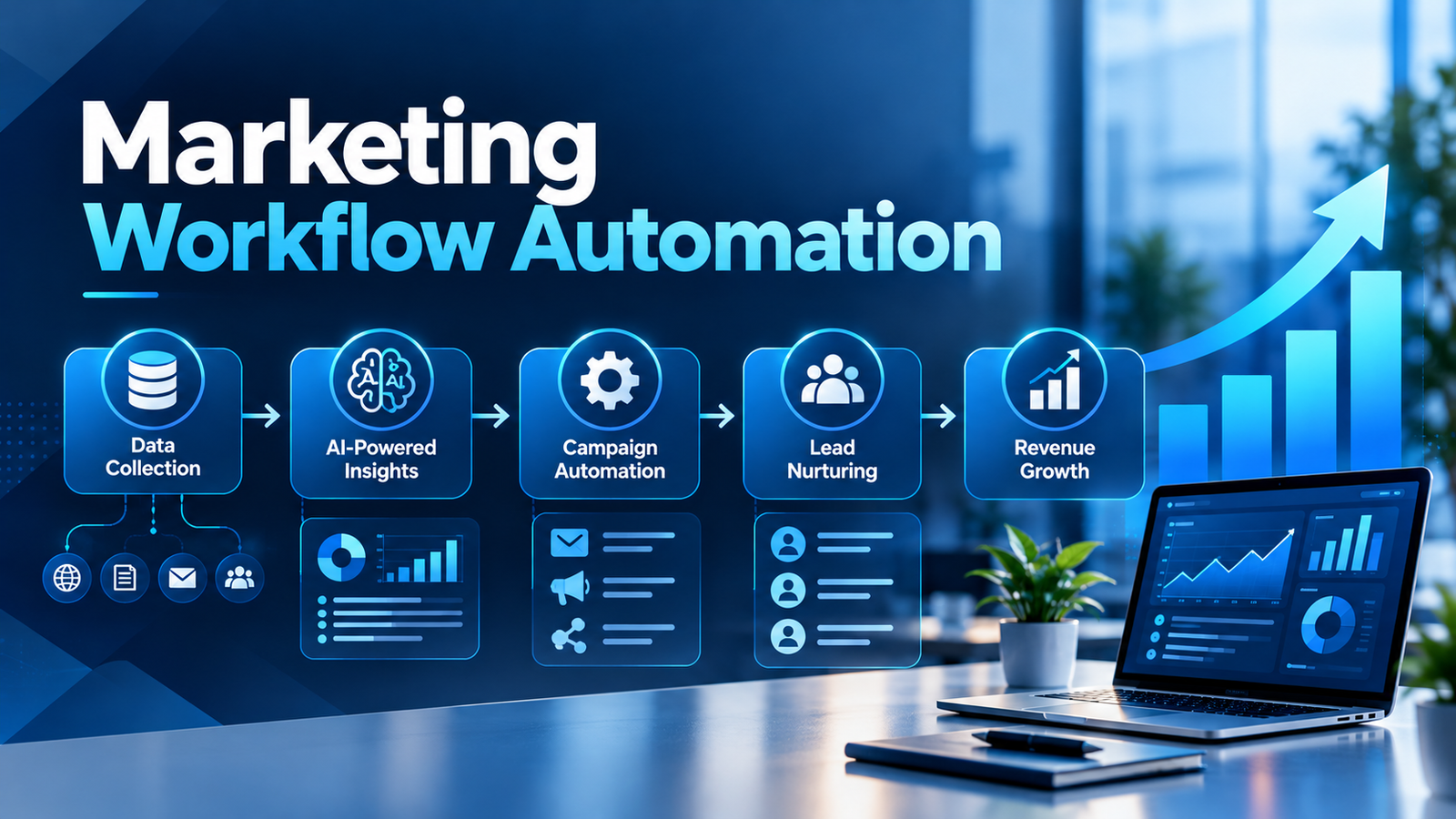
The way businesses attract and convert customers is changing rapidly. In 2026, companies are moving beyond traditional marketing methods and adopting intelligent technologies that improve efficiency, personalization, and customer relationships.
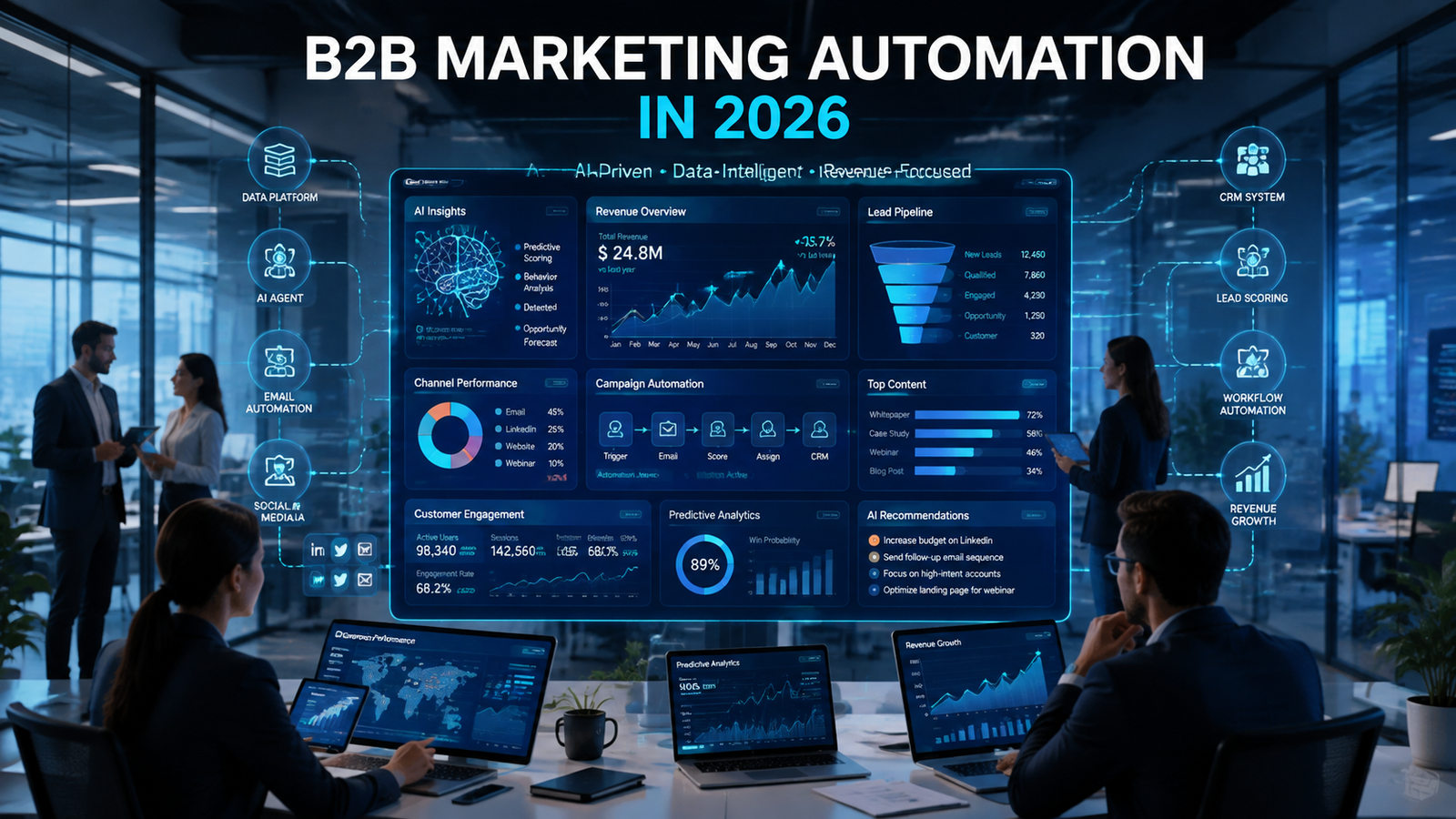
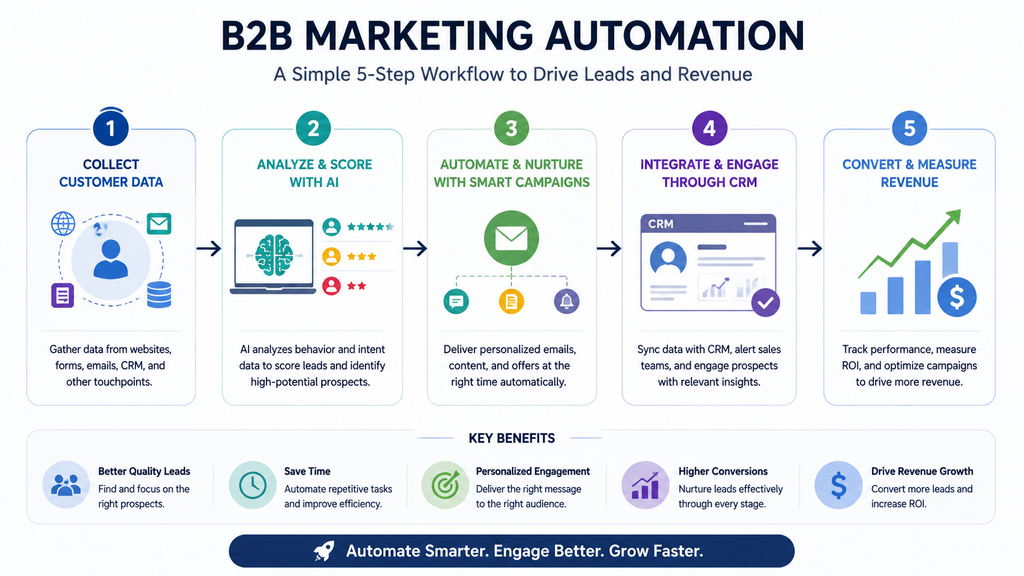
B2B marketing automation is the use of software, data and automated workflows to manage repetitive marketing activities such as lead nurturing, segmentation, email campaigns, scoring, personalization and sales handoffs. In 2026, AI is making these systems more adaptive by helping teams analyze buyer behavior, identify high-intent accounts and improve campaign decisions.
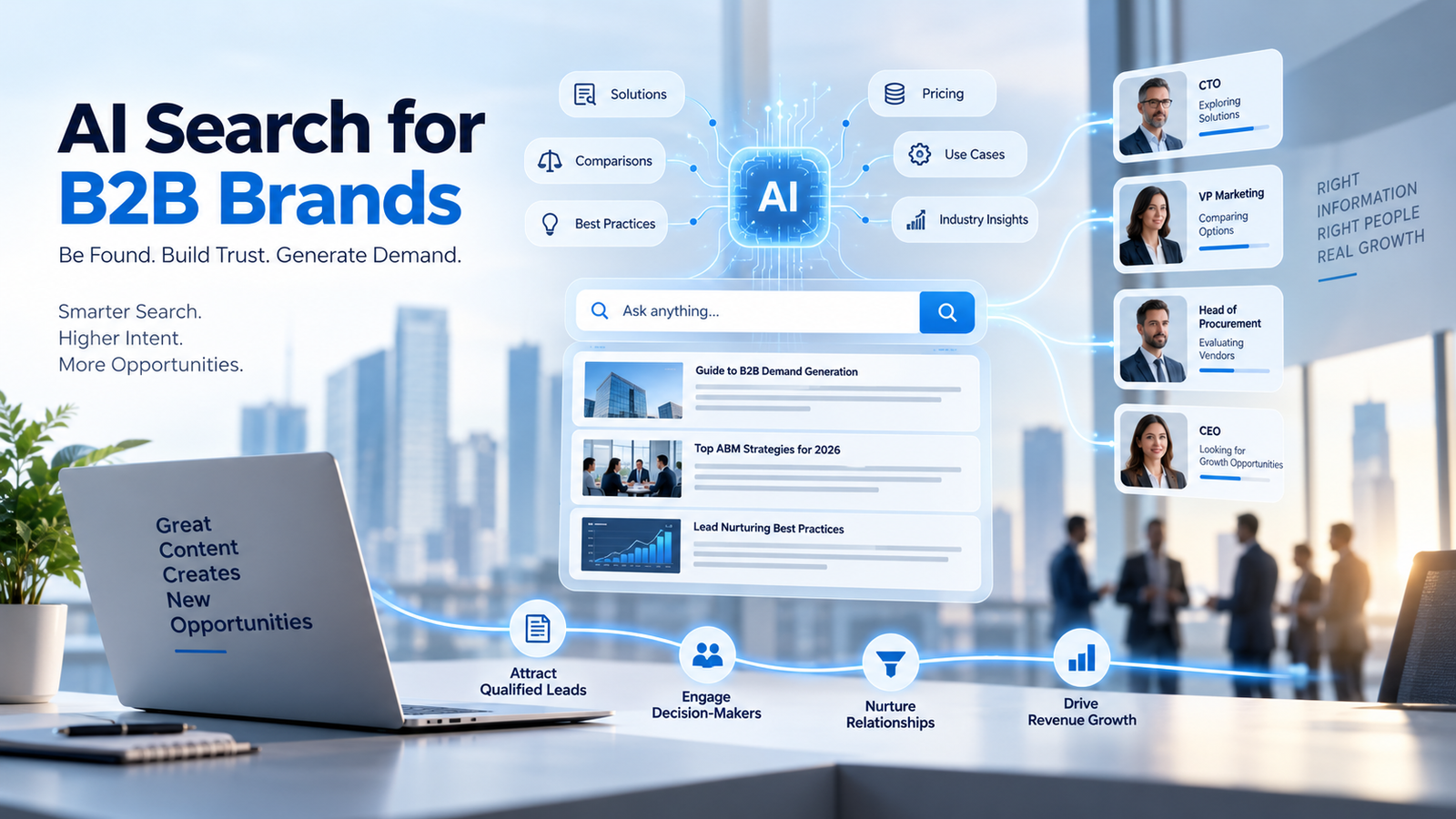
Modern buyers expect personalized experiences. They research solutions online, compare options, and interact with brands across multiple digital channels before making decisions. Automation helps businesses understand these behaviors and create meaningful customer journeys.
Table of Contents
What Is B2B Marketing Automation?
B2B Marketing Automation is the process of using software, artificial intelligence, and data-driven systems to automate marketing activities for business customers.
It helps companies manage repetitive marketing tasks while improving customer communication.
Common B2B marketing automation activities include:
- Email campaign automation
- Lead nurturing
- Customer segmentation
- Lead scoring
- Campaign tracking
- Personalized content delivery
- Marketing performance analysis
For example, when a potential customer downloads a business report from a website, automation tools can identify their interests, send relevant content, and notify the sales team when the prospect becomes ready for a conversation.
This creates a connected experience between marketing and sales teams. If you want to explore practical ways to attract and qualify more B2B prospects, read our guide on B2B Lead Generation.
Why B2B Marketing Automation Matters in 2026
Businesses are facing increasing competition, changing customer expectations, and larger amounts of customer data.
Automation helps companies manage these challenges effectively.
1. AI Creates Smarter Marketing Decisions
Artificial intelligence allows marketers to analyze customer behavior and identify valuable insights.
AI-powered systems can help businesses understand:
- Which customers are most likely to buy
- Which campaigns perform better
- What content attracts prospects
- Which actions improve conversions
Instead of making decisions based only on assumptions, marketers can use real-time data.
2. Personalization Improves Customer Engagement
Generic marketing messages often fail to capture attention.
B2B buyers want content that matches their industry, challenges, and business goals.
Automation allows companies to personalize:
- Emails
- Website experiences
- Product recommendations
- Content offers
- Follow-up communication
Personalized experiences help businesses build trust and stronger relationships.
3. Predictive Analytics Improves Revenue Opportunities
Predictive analytics uses customer data to identify future possibilities.
Businesses can use predictive insights to:
- Identify high-quality leads
- Predict customer needs
- Improve sales forecasting
- Optimize marketing campaigns
This allows companies to focus resources on opportunities with higher potential.
How B2B Marketing Automation Works
B2B marketing automation connects different stages of the buyer journey so marketing and sales teams can respond to prospects more consistently and efficiently.
A typical workflow can look like this:
1. Website Visitor
A potential buyer visits the website through search, social media, paid advertising, email, a referral, or another marketing channel.
At this stage, the visitor may be anonymous, but their activity can still provide useful engagement signals such as:
- Pages viewed
- Content consumed
- Time spent on the website
- Repeat visits
- Campaign source
2. Lead Captured
The visitor becomes a known lead after completing an action such as:
- Filling out a contact form
- Downloading a white paper
- Registering for a webinar
- Subscribing to a newsletter
- Requesting a demo
The information collected can include name, business email, company, job title, and other relevant details.
3. CRM Record Created
The captured lead is added to the CRM or synchronized with an existing contact or account record.
This creates a centralized record that marketing and sales teams can use to track:
- Contact information
- Company details
- Previous engagement
- Campaign activity
- Lead status
- Sales ownership
4. Lead Enriched
The existing lead information can then be enhanced with additional business data.
Enrichment may include:
- Industry
- Company size
- Revenue range
- Location
- Seniority
- Technology usage
- Company domain
This helps teams understand whether the prospect fits their target audience.
5. Audience Segmented
Once enough information is available, the lead can be placed into a relevant audience segment.
Segmentation can be based on:
- Industry
- Company size
- Job role
- Geography
- Buyer stage
- Previous engagement
- Product interest
Different segments can then receive more relevant campaigns and messaging.
6. Lead Scored
Marketing automation systems can assign a score based on profile information and engagement behavior.
For example, a lead may receive a higher score if they:
- Match the ideal customer profile
- Visit high-value pages
- Download multiple resources
- Attend a webinar
- Engage with emails
- Return to the website frequently
Lead scoring helps teams prioritize prospects showing stronger potential interest.
7. Automated Nurture
The lead enters an automated nurture sequence based on their segment, behavior, or stage in the buying journey.
The sequence may include:
- Educational emails
- Case studies
- White papers
- Product information
- Webinar invitations
- Industry insights
- Follow-up content
The objective is to provide useful information while the prospect continues evaluating their needs.
8. High-Intent Signal Detected
As the lead interacts with campaigns and website content, the system may identify stronger buying signals.
Examples include:
- Multiple visits to solution pages
- Pricing-page activity
- Repeated content downloads
- Increased email engagement
- Demo-page visits
- Account-level intent signals
A single action does not always mean someone is ready to buy, so teams should look for patterns across multiple interactions.
9. Sales Handoff
When the lead reaches defined qualification criteria, marketing automation can notify or assign the prospect to sales.
The sales team can receive useful context such as:
- Contact details
- Company information
- Lead score
- Recent website activity
- Content engagement
- Campaign history
- Intent signals
This gives sales representatives more context before beginning outreach.
10. Opportunity
If the prospect moves forward in the sales process, the lead can become a qualified opportunity.
Marketing and sales teams can then continue tracking:
- Opportunity stage
- Pipeline value
- Sales activity
- Campaign influence
- Conversion progress
- Revenue outcome
A simplified B2B marketing automation workflow looks like this:
Website Visitor → Lead Captured → CRM Record Created → Lead Enriched → Audience Segmented → Lead Scored → Automated Nurture → High-Intent Signal Detected → Sales Handoff → Opportunity
The strength of B2B marketing automation comes from connecting these activities into a repeatable process. Instead of managing every interaction manually, teams can use data, rules, and automated workflows to deliver more relevant experiences and help sales focus on better-qualified opportunities.
B2B Marketing Automation Benefits and Key Points
1. Better Lead Generation
Automation improves the way companies attract and manage potential customers.
Businesses can capture leads through:
- Website forms
- Content downloads
- Webinars
- Email campaigns
- Social media interactions
Automation then helps nurture these leads until they are ready for sales discussions.
2. Improved Marketing Efficiency
Marketing teams spend less time handling repetitive tasks.
Automation can manage:
- Email scheduling
- Customer segmentation
- Campaign reporting
- Lead tracking
This gives marketers more time to focus on strategy and creativity.
3. Stronger Marketing and Sales Alignment
One common challenge in B2B organizations is poor communication between marketing and sales teams.
Automation platforms provide shared customer information, helping teams understand:
- Lead activity
- Customer interests
- Buying signals
- Campaign performance
Better alignment creates smoother customer journeys.
4. Data-Driven Decision Making
Modern marketing depends on accurate data.
Automation tools collect insights from:
- Website visits
- Customer interactions
- Campaign results
- CRM activities
These insights help businesses improve future marketing decisions.
How to Use B2B Marketing Automation Effectively
Step 1: Define Clear Marketing Goals
Before implementing automation, businesses should decide what they want to achieve.
Examples include:
- More qualified leads
- Higher conversion rates
- Better customer retention
- Faster sales cycles
Clear goals help companies select the right automation strategy.
Step 2: Organize and Improve Customer Data
Good automation depends on quality data.
Businesses should maintain:
- Updated customer information
- Accurate CRM records
- Proper audience segmentation
- Consistent tracking
Poor data quality can reduce campaign effectiveness.
Step 3: Create Automated Customer Journeys
A customer journey should guide prospects through different stages.
Example:
Awareness → Education → Consideration → Decision → Customer Relationship
Automation helps deliver useful content during each stage.
Step 4: Measure and Optimize Performance
Businesses should continuously review marketing results.
Important metrics include:
- Lead quality
- Customer engagement
- Conversion rates
- Revenue contribution
Regular optimization improves long-term results.
Common Mistakes to Avoid
1. Using Automation Without Strategy
Technology alone does not create successful marketing.
Companies need a clear understanding of:
- Target customers
- Business objectives
- Customer journey
Automation should support a marketing strategy.
2. Ignoring Customer Privacy
Businesses must protect customer information and follow privacy standards.
Responsible data management builds customer trust.
3. Over-Automating Customer Communication
Too much automation can make communication feel unnatural.
Businesses should combine automation with human interaction.
4. Choosing Tools Without Integration
Marketing tools should work together.
Disconnected systems can create inaccurate data and inefficient workflows.
Best Practices for B2B Marketing Automation in 2026
Focus on Customer Experience
Successful automation is not only about sending messages. It is about creating valuable customer interactions.
Combine AI With Human Creativity
AI can analyze information and automate tasks, but human creativity is important for:
- Brand storytelling
- Content creation
- Relationship building
Keep Testing and Improving
Businesses should regularly test:
- Campaign messages
- Customer segments
- Marketing channels
Continuous improvement leads to better results.
Build an Integrated Marketing Technology Stack
Companies should connect:
- CRM platforms
- Marketing automation tools
- Analytics systems
- Customer data platforms
A connected technology ecosystem creates better customer insights.
Frequently Asked Questions About B2B Marketing Automation
1. What is B2B marketing automation?
B2B marketing automation is the use of software, data, and automated workflows to manage repetitive marketing activities such as lead nurturing, segmentation, email campaigns, lead scoring, personalization, campaign tracking, and sales handoffs.
It helps marketing teams manage larger volumes of prospects while creating more consistent customer journeys.
2. How does B2B marketing automation work?
B2B marketing automation connects different stages of the buyer journey.
A typical workflow may include:
Website Visitor → Lead Captured → CRM Record Created → Lead Enriched → Audience Segmented → Lead Scored → Automated Nurture → High-Intent Signal Detected → Sales Handoff → Opportunity
The system uses data, engagement signals, and predefined rules to determine what action should happen next.
3. What are the main benefits of B2B marketing automation?
Key benefits can include:
- Better lead nurturing
- Improved marketing efficiency
- More consistent segmentation
- Faster lead follow-up
- Stronger marketing and sales alignment
- Better campaign measurement
- More personalized customer experiences
- Improved pipeline visibility
The exact impact depends on the quality of the data, strategy, processes, and technology being used.
4. How does AI improve B2B marketing automation?
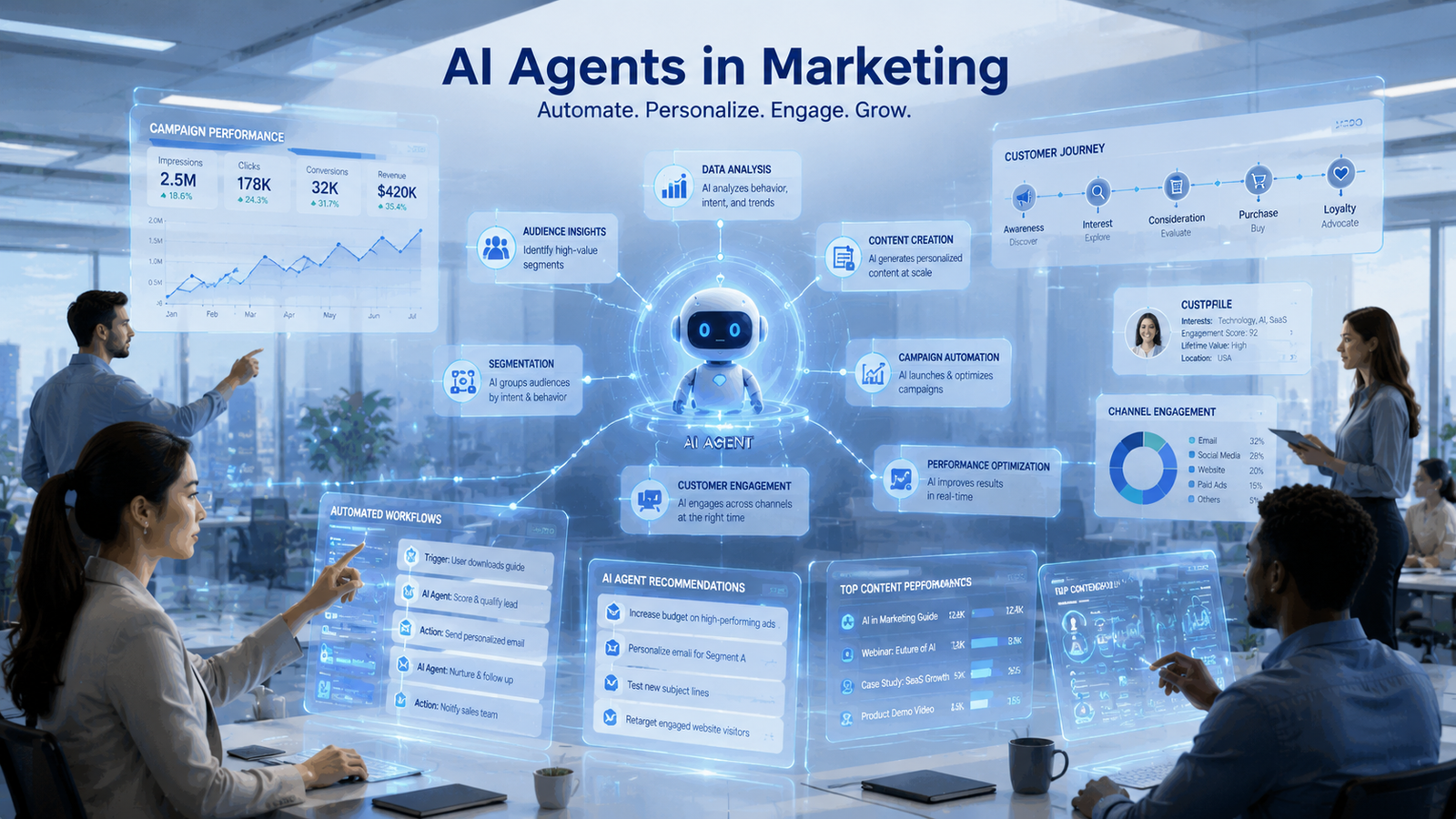
AI can help marketing automation platforms analyze customer behavior, identify patterns, prioritize prospects, recommend content, improve segmentation, and support predictive lead scoring.
AI can also help marketers identify unusual changes in campaign performance and analyze larger amounts of customer data more efficiently.
Human judgment is still important when interpreting these insights and deciding what action should be taken.
5. What is the difference between CRM and marketing automation?
A CRM primarily helps businesses manage customer and prospect relationships, account information, sales activity, opportunities, and pipeline.
Marketing automation focuses more on activities such as:
- Email campaigns
- Lead nurturing
- Segmentation
- Lead scoring
- Campaign triggers
- Personalization
- Marketing analytics
The two systems often work together by sharing customer and campaign information.
6. How does marketing automation help with lead generation?
Marketing automation can help businesses capture, organize, nurture, score, and qualify leads.
For example, when a prospect downloads a report, the system can add the contact to the CRM, enrich the record, place the prospect into an audience segment, begin a nurture sequence, and notify sales when stronger buying signals appear.
This allows marketing teams to manage leads more consistently.
7. What are examples of B2B marketing automation?
Common examples include:
- Automated welcome emails
- Lead nurturing sequences
- Webinar follow-up campaigns
- Lead scoring
- Account-based campaign triggers
- Content recommendations
- CRM lead routing
- Sales notifications
- Customer onboarding workflows
- Re-engagement campaigns
These workflows can be adapted based on the company’s sales process and customer journey.
8. What metrics should businesses track for B2B marketing automation?
Useful metrics can include:
- Lead quality
- Email engagement
- Conversion rate
- Lead-to-MQL conversion
- MQL-to-SQL conversion
- Cost per qualified lead
- Opportunity creation
- Pipeline contribution
- Revenue contribution
Teams should focus on metrics that connect marketing activity with meaningful business outcomes.
9. Can small B2B companies use marketing automation?
Yes. Small B2B companies can use marketing automation without building highly complex systems.
A business can start with simple workflows such as:
- Welcome emails
- Newsletter automation
- Lead follow-up
- Contact segmentation
- Basic lead scoring
- CRM synchronization
Automation can then become more advanced as the company grows and collects more reliable data.
10. What are common B2B marketing automation mistakes?
Common mistakes include:
- Automating without a clear strategy
- Using poor-quality customer data
- Creating too many automated messages
- Ignoring customer privacy
- Using disconnected tools
- Failing to measure campaign performance
- Sending the same message to every audience segment
Marketing automation works best when technology supports a clear customer and revenue strategy.
Final Thoughts
B2B Marketing Automation is becoming a critical growth strategy for businesses in 2026. AI, data intelligence, and predictive analytics are helping companies create smarter campaigns, improve customer experiences, and increase revenue opportunities.
The future of B2B marketing will not focus only on reaching more customers. It will focus on understanding customers better and delivering personalized experiences.
Businesses that adopt intelligent automation today will be better prepared for the future of digital marketing.