Introduction
Creating valuable content is an important part of B2B marketing, but producing high-quality resources does not automatically bring them in front of the right audience. Businesses also need a clear distribution strategy to reach potential buyers, build industry visibility, and create meaningful engagement.
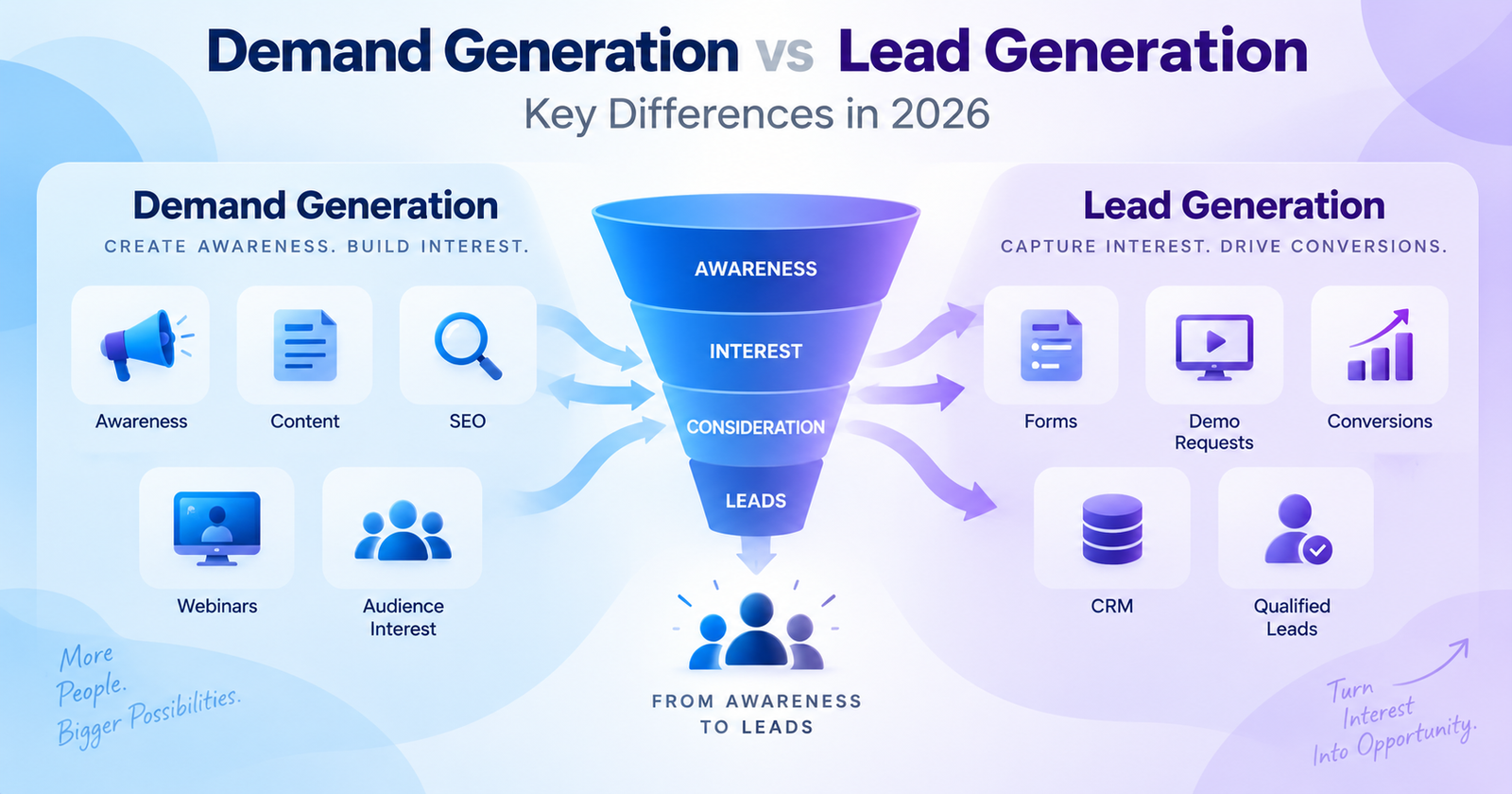
This is where B2B Content Syndication becomes an important part of a successful B2B demand generation strategy.
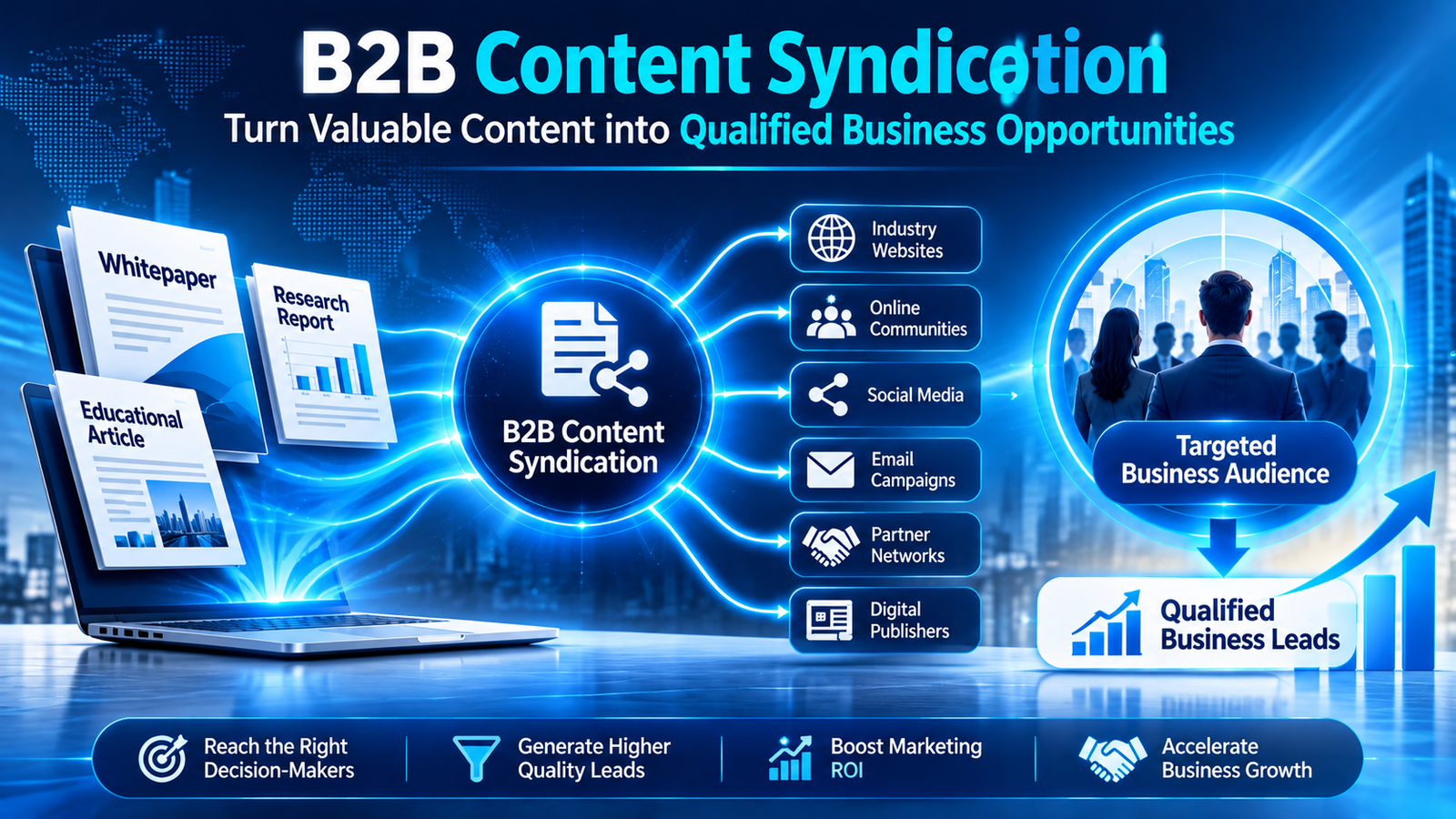
It allows businesses to distribute original content through relevant third-party websites, industry publications, and professional platforms. Instead of relying only on website traffic and social media, companies can introduce their expertise to new audiences and connect with decision-makers who are researching business solutions.
From whitepapers and research reports to case studies and educational guides, content syndication creates opportunities to attract relevant prospects and support the buyer journey.
However, successful campaigns require more than content distribution. Audience targeting, data quality, lead qualification, and consistent nurturing all play an important role in turning content engagement into valuable business opportunities.
Table of Contents
What Is B2B Content Syndication?
B2B Content Syndication is a marketing strategy that involves distributing original business content through external websites, publishing platforms, industry networks, and other relevant digital channels.
The objective is to expand content reach and connect with professionals who may have an interest in a company’s products, services, or industry expertise. B2B audience intelligence helps businesses identify relevant prospects, understand buyer interests, and deliver content to the right decision-makers.
For example, consider a B2B technology company that publishes a whitepaper about improving marketing automation. Instead of promoting the resource only through its website, the company distributes it through relevant industry platforms where marketing professionals and business decision-makers discover educational content.
Interested readers may register to access the whitepaper. Their information can then be evaluated against the company’s target audience and lead qualification requirements.
Common content formats include:
- Whitepapers and industry reports
- E-books and educational guides
- Original research and surveys
- Business case studies
- Webinars and expert presentations
- Technical articles and industry insights
The value of content syndication lies in connecting relevant information with the right audience, rather than simply increasing the number of content downloads.
Why B2B Content Syndication Matters in 2026
B2B purchasing decisions often involve multiple stakeholders, detailed research, and longer evaluation processes. Buyers explore industry challenges, compare potential solutions, and evaluate providers before making purchasing decisions.
To maintain engagement throughout the buying journey, businesses can use B2B marketing automation to deliver relevant content, manage follow-ups, and nurture potential customers.
B2B Content Syndication helps businesses participate in this journey by making their expertise accessible through additional distribution channels.
Expanding Brand Visibility
A company website is an important marketing asset, but relying exclusively on owned channels can limit the reach of its content.
Distributing resources through relevant third-party platforms introduces the brand to new professional audiences.
Repeated exposure to useful industry information can also improve brand familiarity and help businesses establish their expertise.
Reaching Relevant Decision-Makers
Generating website traffic is not the same as reaching potential customers. Reaching the right decision-makers is an important step in building a strong pipeline. A structured B2B lead generation process helps businesses identify relevant prospects and turn audience interest into potential sales opportunities.
B2B marketers need to connect with professionals who influence business decisions, including marketing directors, technology leaders, procurement managers, and department heads.
Content distribution campaigns can use industry, company size, job function, seniority, and geographic location to improve audience relevance.
Supporting Qualified Lead Generation
Content downloads and registrations can provide useful information about potential prospects.
However, not every person who downloads a whitepaper is ready to purchase.
Businesses should evaluate contact accuracy, company relevance, professional responsibilities, and engagement before deciding whether a prospect should enter a nurturing or sales process.
Strengthening Industry Authority
Sharing original research, practical insights, and educational resources helps businesses demonstrate their knowledge.
When content addresses genuine business challenges, it can build credibility and encourage potential buyers to explore the company’s expertise further.
Supporting Long-Term Demand Generation
Content syndication can introduce a business to potential buyers before they are ready to engage with sales.
With relevant follow-up communication and educational resources, businesses can continue building relationships and supporting future purchasing decisions.
How Does B2B Content Syndication Work?
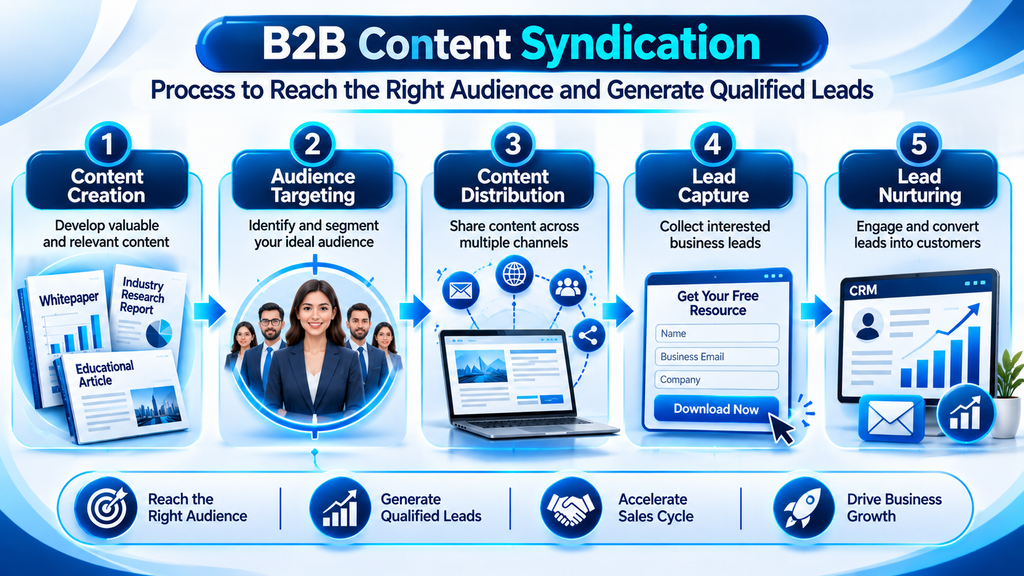
B2B content syndication follows a simple process. Businesses create valuable content, share it across relevant platforms, reach their target audience, and turn interested readers into potential customers.
Instead of depending only on website traffic or social media, companies use multiple distribution channels to connect their content with decision-makers who are actively looking for industry knowledge, solutions, and business insights.
Let’s understand how the process works.
1. Content Creation
The first step is creating valuable and informative content that addresses the challenges of your target audience. This could include whitepapers, industry research reports, case studies, educational articles, eBooks, and practical business guides.
The goal is to provide useful information that helps potential customers understand a problem and explore possible solutions. High-quality content gives people a reason to engage with your business.
2. Audience Targeting
Creating good content is important, but reaching the right people is equally important.
Businesses identify their ideal audience based on factors such as industry, company size, job title, location, and business interests. This helps marketers focus on relevant decision-makers rather than reaching a broad audience that may have little interest in their offerings.
For example, a B2B software company may target IT managers, marketing directors, and business leaders who are looking for better technology solutions.
3. Content Distribution
Once the content and target audience are ready, the next step is distributing the content through relevant third-party platforms.
Businesses can use industry websites, professional publishing networks, content discovery platforms, email newsletters, and other relevant channels to increase content visibility.
This allows valuable resources to reach audiences beyond the company’s own website and creates more opportunities for potential customers to discover the brand.
4. Lead Capture
When readers find the content useful, they may show interest in learning more about the business or its solutions.
At this stage, companies use lead capture forms to collect relevant information, such as a person’s name, business email, company name, job title, and industry.
For example, someone interested in downloading a B2B research report may complete a short form to access the resource. This information helps marketing teams identify potential prospects and understand their interests.
However, collecting contact details is only the beginning. Businesses still need to evaluate whether those contacts match their ideal customer profile.
5. Lead Nurturing
After capturing leads, businesses need to build relationships with those prospects through relevant and helpful communication.
Marketing teams can use email campaigns, educational content, case studies, newsletters, and personalized follow-ups to keep prospects engaged.
Leads can also be added to CRM and marketing automation systems to track interactions and understand their level of interest.
Over time, this process helps businesses identify sales-ready prospects and create better opportunities for the sales team.
7 Powerful Benefits of B2B Content Syndication
A well-planned content distribution strategy can support several important B2B marketing objectives.
1. Reach New Professional Audiences
Content syndication allows businesses to reach audiences outside their existing website visitors, email subscribers, and social media followers.
This is particularly valuable for companies entering new industries, targeting different business segments, or expanding into additional markets.
By selecting distribution partners with relevant audiences, marketers can introduce their content to professionals who may not have discovered their brand through traditional channels.
2. Generate Opportunities Through Valuable Content
High-quality content gives potential buyers a reason to engage with a business.
For example, a whitepaper explaining how companies can improve lead qualification may attract demand generation managers interested in improving their marketing performance.
When the content addresses a specific business challenge, it can create more relevant conversations with potential prospects.
3. Improve Audience Targeting
Successful B2B marketing depends on understanding who the ideal customer is.
Content distribution campaigns can use audience characteristics such as:
- Industry and business category
- Company size
- Job title and department
- Professional seniority
- Geographic market
- Relevant business interests
Combining these criteria with a clearly defined Ideal Customer Profile (ICP) helps marketers focus their campaigns on relevant business audiences.
4. Make Better Use of Existing Content
Businesses often invest significant time and resources in creating whitepapers, research reports, case studies, and educational articles.
However, these assets may receive limited exposure if they are promoted through only one or two channels.
Syndication provides additional distribution opportunities for existing resources.
A single research report, for example, could be promoted through an industry publication, a relevant content platform, a professional network, and an email campaign.
This helps businesses extend the value of their content investment.
5. Support Lead Nurturing Activities
Content engagement provides an opportunity to understand a prospect’s interests.
A person who downloads a marketing automation guide may be interested in related topics such as CRM integration, campaign optimization, or lead management.
Marketing teams can use these interests to deliver relevant educational content and develop a more useful nurturing experience.
Explore the Salesforce guide to B2B content marketing to learn more about content formats, distribution methods, and marketing goals.
6. Improve Marketing and Sales Alignment
Content syndication can support stronger coordination between marketing and sales teams.
Marketing teams manage content distribution, audience targeting, and lead qualification, while sales teams provide feedback about prospect relevance and business requirements.
This shared understanding helps organizations improve lead handovers and identify opportunities that deserve further attention.
7. Support Measurable Campaign Performance
Content distribution campaigns provide opportunities to measure audience engagement and lead acquisition performance.
Marketers can evaluate which resources, channels, and audience segments are contributing to their objectives.
This information helps businesses identify what is working and where campaign improvements are needed.
How to Build an Effective B2B Content Syndication Strategy
A successful B2B Content Syndication strategy requires more than distributing content across multiple platforms. Businesses need to understand their target audience, select relevant distribution channels, and deliver valuable resources that address buyer needs.
By combining targeted content distribution with effective lead nurturing, B2B Content Syndication can help marketing teams attract relevant prospects, build engagement, and create better business opportunities.
Step 1: Define Your Campaign Objectives
Start by identifying what the campaign should achieve.
Your objectives may include:
- Expanding brand awareness
- Reaching new decision-makers
- Generating relevant business leads
- Promoting a whitepaper or research report
- Supporting demand generation
- Creating opportunities for sales engagement
Clear objectives make it easier to select appropriate content and evaluate campaign performance.
Step 2: Understand Your Ideal Customer Profile
Before distributing content, define the businesses and professionals you want to reach.
Consider their industry, company size, geographic location, job responsibilities, and business challenges.
For example, a company offering B2B marketing technology may prioritize marketing operations managers, demand generation leaders, and revenue teams.
A well-defined audience helps reduce irrelevant registrations and improves campaign relevance.
Step 3: Create Relevant and Valuable Content
Choose content that addresses a specific challenge faced by your target audience.
Avoid making every resource promotional. Instead, focus on providing information that helps readers understand their problems and explore possible solutions.
Whitepapers, research reports, case studies, and educational guides are useful formats for explaining complex B2B topics.
Step 4: Select the Right Distribution Partners
Evaluate third-party platforms based on their audience relevance, industry coverage, targeting capabilities, lead verification processes, and reporting transparency.
Do not select a distribution partner only because it promises a high volume of registrations.
The quality and relevance of the audience should remain a priority.
Step 5: Establish Lead Qualification Processes
After collecting registrations, review the available information to determine whether prospects match your campaign requirements.
Consider contact accuracy, company details, job roles, and business relevance.
Establish clear definitions for Marketing Qualified Leads (MQLs) and Sales Qualified Leads (SQLs) so that marketing and sales teams understand which prospects require further attention.
Step 6: Develop a Relevant Follow-Up Strategy
Deliver the requested resource first, then use appropriate communication to maintain engagement.
Follow-up activities may include related articles, educational emails, industry reports, case studies, and consultation opportunities.
Step 7: Monitor and Optimize Campaigns
Review campaign performance regularly.
Identify which content topics attract relevant audiences, which distribution partners deliver better results, and where lead quality needs improvement.
Use these findings to refine future campaigns.
Common B2B Content Syndication Mistakes to Avoid
Even a well-designed campaign can underperform when important details are overlooked.
Prioritizing Lead Volume Over Quality
Generating a large number of registrations does not necessarily create valuable business opportunities. Focus on audience relevance and lead qualification.
Choosing Irrelevant Distribution Platforms
A platform with a large audience may not be suitable if its users do not match your target customer profile.
Ignoring Data Accuracy
Duplicate records, incorrect email addresses, and outdated contact information can affect marketing performance. Use appropriate validation processes before adding contacts to nurturing campaigns.
Using Generic Follow-Up Communication
Different prospects have different interests. Follow-up messages should reflect the content they engaged with and their potential business requirements.
Failing to Measure Business Outcomes
Do not limit campaign reporting to downloads and registrations. Track qualified leads, sales engagement, and opportunities created wherever reliable data is available.
Best Practices for Better Content Syndication Results
To build a sustainable distribution strategy, businesses should focus on consistency, relevance, and measurable performance.
- Develop original content that addresses real industry challenges.
- Define your ideal customer profile before launching campaigns.
- Choose distribution partners based on audience relevance.
- Use appropriate targeting and lead qualification criteria.
- Validate contact information before nurturing prospects.
- Personalize follow-up communication based on content interests.
- Connect campaign data with CRM and marketing automation systems.
- Monitor MQLs, SQLs, and sales opportunities.
- Review campaign performance and improve targeting regularly.
- Maintain alignment between marketing and sales teams.
These practices help create a more organized approach to content distribution and long-term demand generation.
The Future of B2B Content Syndication
The future of B2B content distribution will be influenced by advances in artificial intelligence, marketing automation, audience intelligence, and data-driven personalization.
Businesses are increasingly looking for ways to understand their audiences more accurately and deliver relevant information throughout the buying journey.
AI-powered marketing tools can help analyze engagement patterns, identify content interests, and support more informed audience segmentation.
At the same time, stronger attention to data quality, consent, and transparent lead acquisition practices will remain important.
Another emerging priority is connecting content engagement with wider marketing and sales systems. Integrating distribution platforms with CRM and marketing automation tools can help organizations improve reporting, lead management, and follow-up processes.
Rather than focusing only on the number of content downloads, businesses will need to evaluate how distribution contributes to meaningful buyer engagement and revenue opportunities.
Frequently Asked Questions About B2B Content Syndication
1. What is B2B Content Syndication?
B2B Content Syndication is the process of distributing valuable content, such as blogs, whitepapers, and reports, through third-party platforms to reach a wider business audience.
2. How does B2B Content Syndication generate leads?
It helps businesses reach relevant audiences and encourage potential buyers to access valuable resources by sharing their contact information through lead forms.
3. What types of content work best for B2B Content Syndication?
Whitepapers, research reports, industry guides, case studies, webinars, and educational articles are commonly used for B2B Content Syndication campaigns.
4. What are the benefits of B2B Content Syndication?
It helps increase brand visibility, expand audience reach, attract relevant prospects, support lead generation, and strengthen demand generation efforts.
5. How do you choose the right content syndication platform?
Choose platforms based on your target audience, industry relevance, audience quality, lead verification process, distribution reach, and campaign reporting capabilities.
6. How can businesses measure B2B Content Syndication performance?
Businesses can track metrics such as content downloads, leads generated, cost per lead, lead quality, engagement, and conversion rates to evaluate campaign performance.
Final Thoughts
B2B Content Syndication is an effective approach for expanding content reach, connecting with relevant business audiences, and supporting a broader demand generation strategy.
However, successful results depend on more than distributing content across multiple platforms.
Businesses need to understand their target audience, develop valuable resources, select suitable distribution partners, maintain accurate lead data, and create relevant nurturing experiences.
When these activities work together, content syndication can become a valuable part of a structured B2B marketing strategy.
At Rich Demand Tech, we believe that sustainable B2B growth starts with reaching the right audience, delivering meaningful information, and building stronger connections between marketing engagement and business opportunities.
The goal is not simply to generate more leads. It is to create better opportunities through relevant content, reliable data, and smarter demand generation.